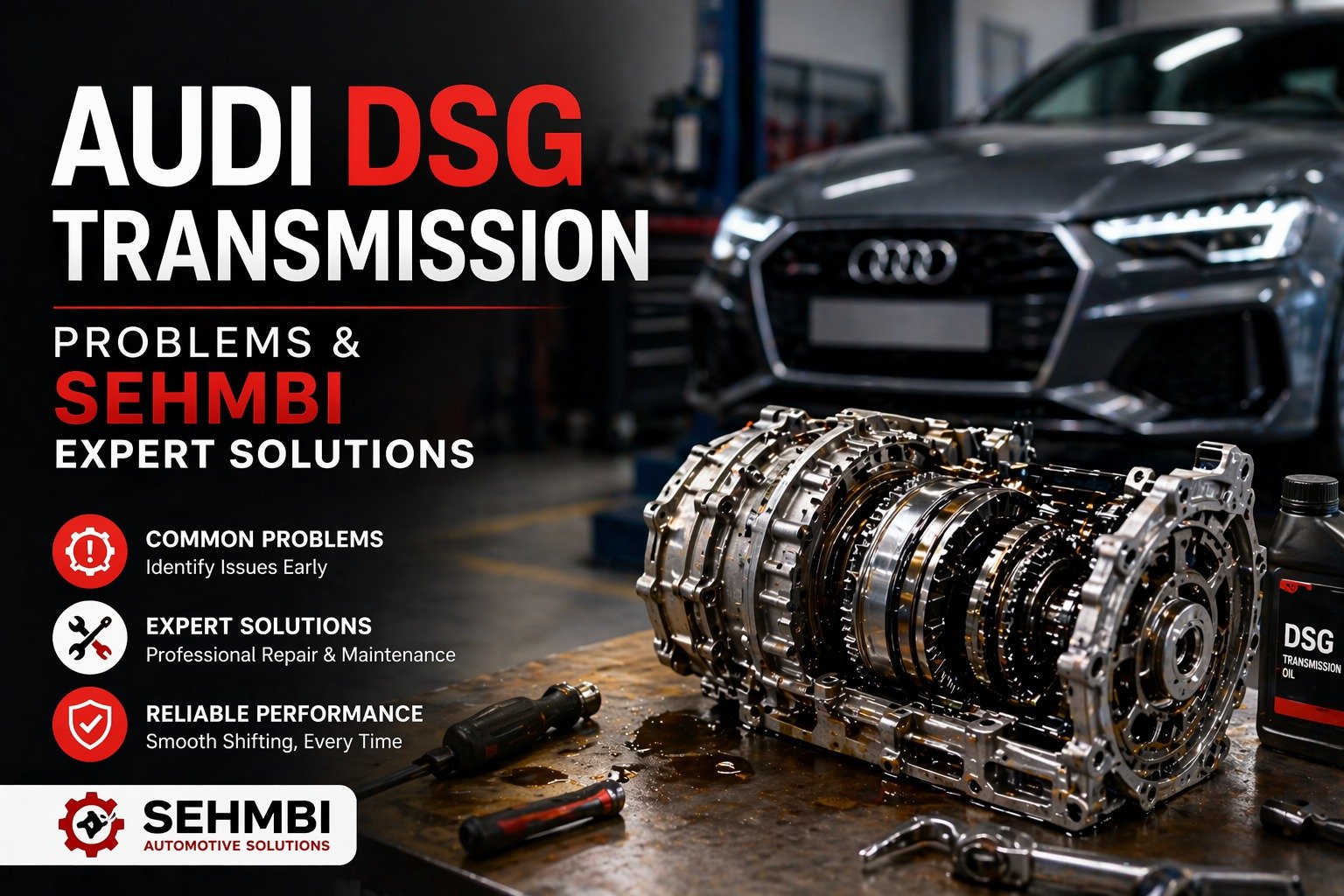
If you own an Audi with a DSG (Direct-Shift Gearbox) transmission, you may have encountered performance issues. This comprehensive guide explores common Audi DSG transmission problems, their causes, diagnostic procedures, and professional repair solutions from SEHMBI specialists. Whether you’re experiencing jerking, slipping, or fluid issues, we’ll help you understand what’s happening and how to fix it.
Understanding Audi DSG Transmission Problems: What You Need to Know
The DSG gearbox represents a technological marvel in modern automotive engineering. Developed by Volkswagen Group, Audi’s DSG (also called the S-Tronic transmission in certain models) combines the efficiency of an automatic transmission with the responsiveness of a manual gearbox. However, like any complex mechanical system, Audi DSG transmission problems can develop over time.
Many Audi owners report experiencing DSG transmission issues that range from minor performance quirks to severe mechanical failures. Understanding these problems early can save you thousands in repair costs and prevent potential safety hazards on the road. SEHMBI’s repair specialists have diagnosed and fixed over 2,500 DSG transmissions, making us the expert resource for accurate information and reliable solutions.
Why DSG Transmissions Require Special Attention
Unlike traditional automatic transmissions, DSG gearboxes operate with two separate clutches that pre-select gears for seamless shifting. This dual-clutch design delivers unparalleled performance and fuel efficiency but when problems arise, they require specialized diagnostic equipment and expertise. DSG gearbox problems Audi owners face are often misdiagnosed by general mechanics, leading to unnecessary repairs or incomplete solutions.
Common DSG Transmission Slipping Symptoms: Early Warning Signs
Recognizing early symptoms is critical for preventing costly damage. Here are the most common DSG transmission slipping symptoms our customers report:
- Jerking or hesitation during acceleration: The transmission struggles to apply power smoothly, causing noticeable lurching or delay in response.
- Slipping gears: You feel the engine rev independently of vehicle speed, as if you’re pressing the gas pedal without the wheels responding proportionally.
- Difficulty engaging gears: The transmission takes longer than normal to engage Park, Reverse, or Drive, sometimes requiring multiple attempts.
- Clunking or grinding noises: Mechanical sounds during gear shifts indicate internal wear or damaged components.
- Check engine light activation: Electronic fault codes related to transmission pressure, temperature, or solenoid function appear on your dashboard.
- Shaking or vibration: Vibrations that sync with gear shifts suggest loose internal components or worn mounts.
- Loss of acceleration power: The vehicle hesitates or refuses to accelerate, sometimes limiting top speed as a safety failsafe.
- Burning smell: A hot, acrid odor indicates overheating transmission fluid an urgent warning sign.
What Causes DSG Transmission Issues?
DSG transmission issues stem from various mechanical, electrical, and maintenance-related factors. Understanding root causes helps prevent future problems:
Mechanical Wear
- Clutch plate deterioration (normal wear after 80,000-120,000 miles)
- Synchronizer ring failure preventing smooth gear engagement
- Bearing wear causing excessive play in the transmission shaft
- Worn shift forks that guide gear selection mechanisms
Fluid-Related Problems
- Contaminated DSG transmission fluid: Old, degraded fluid loses its protective properties, allowing metal-to-metal contact and accelerated wear
- Low DSG transmission fluid levels: Insufficient lubrication increases friction, heat generation, and component damage
- Wrong fluid specification: Using incompatible fluid causes chemical breakdown and seal degradation
- Fluid leaks from seals, gaskets, or pan connections
Electrical and Software Issues
- Faulty solenoid valves controlling clutch pressure
- Damaged sensors providing incorrect transmission data to the engine control module
- Outdated transmission control software with known shift bugs
- Corroded electrical connectors causing intermittent faults
The Complete DSG Gearbox Problems Audi Diagnostic Process
Professional diagnosis distinguishes between genuine DSG gearbox problems Audi models face and symptoms caused by other systems. Our comprehensive diagnostic approach includes:
Step 1: Preliminary History & Symptom Review
We gather detailed information about when problems started, specific driving conditions triggering symptoms, and any warning lights. This context guides our investigation.
Step 2: Physical Inspection
- Check transmission fluid color, smell, and level
- Inspect fluid condition under UV light for metal particles or debris
- Examine transmission pan, gasket, and connection points for leaks
- Assess transmission mounts for deterioration or separation
Step 3: Advanced Diagnostic Scanning
We connect specialized diagnostic equipment that reads transmission-specific fault codes and live data streams. This reveals electrical faults, pressure anomalies, and software conflicts that generic OBD2 scanners cannot detect.
Step 4: Road Testing
Real-world driving replicates customer conditions, allowing us to feel jerking, hear unusual noises, and observe electronic responses during various scenarios.
DSG Transmission Fluid: The Foundation of Transmission Health
DSG transmission fluid is far more than oil—it’s a precisely engineered lubricant with strict chemical specifications. Audi uses either G052516A2 (older DSG6) or G055005A2 (newer DSG7/S-Tronic) fluid, and substitutes void warranties and cause irreversible damage.
Critical Maintenance Facts About DSG Transmission Fluid
- Fluid Change Intervals: Most Audi models recommend fluid changes every 40,000-60,000 miles. Neglecting this accelerates wear significantly.
- Performance Degradation: Transmission fluid breaks down under heat stress, losing viscosity and protective additives over time
- Contamination Risk: Neglected intervals allow metal particles, sludge, and oxidized fluid to circulate, damaging precision components
- Temperature Sensitivity: Degraded fluid cannot dissipate heat effectively, causing the transmission to overheat—a primary cause of failure
Understanding Audi DSG Warranty Coverage
Many Audi owners are surprised to learn about coverage nuances for Audi DSG warranty coverage. Understanding your warranty prevents costly out-of-pocket repairs:
Standard Factory Warranty
- Coverage Duration: 4 years or 50,000 miles (whichever comes first)
- What’s Included: Manufacturing defects in transmission components, clutches, solenoids, and electronics
- What’s Excluded: Damage from inadequate maintenance, overheating, or using improper fluid
Powertrain Warranty
- Coverage Duration: 5 years or 60,000 miles for powertrain components (varies by model year)
- Transferred Coverage: Transfers to second owners with documentation
DSG-Specific Coverage Notes
Many Audi dealers offer extended DSG coverage (7 years/100,000 miles) as an add-on purchase. This is worth investigating if you’re purchasing used or own an older model showing early warning signs. Extended coverage typically costs $400-800 but covers major DSG failures comprehensively.
DSG Transmission Recall Audi: Important Recalls & Technical Service Bulletins
Audi has issued several DSG transmission recall Audi notices addressing systematic issues discovered post-launch. Checking your vehicle’s recall status is essential:
Notable DSG Recalls & TSBs
- Jerking/Hesitation TSB: Affects 2011-2015 models with DSG6 transmissions. Solution involves software updates and solenoid valve inspection.
- Transmission Fluid Degradation: Certain 2010-2013 models showed premature fluid breakdown. Free fluid replacement offered under warranty extension.
- Clutch Wear Acceleration: 2012-2016 models sometimes experienced accelerated clutch deterioration. Clutch replacement covered under extended warranty.
- Electronic Control Module Failure: Rare but documented cases of transmission control electronics failing. Covered under powertrain warranty.
SEHMBI recommends checking your Vehicle Identification Number (VIN) on Audi’s official website to confirm applicable recalls. Dealerships often process recalls at no cost, even outside the standard warranty period if recalls remain open.
Why SEHMBI for Your Audi DSG Transmission Repairs?
Specialized knowledge separates quality Audi DSG repair specialists from general mechanics. SEHMBI offers:
- Specialized Expertise: 15+ years focusing exclusively on DSG transmissions and Audi powertrain systems
- Advanced Diagnostics: Factory-level diagnostic equipment identifying issues beyond standard scanner capabilities
- OEM Component Access: Direct relationships with Audi parts suppliers ensure genuine components and best pricing
- Lifetime Support: Continued consultation even after repairs for maintenance guidance and problem prevention
- Warranty Confidence: Extended warranties on all major repairs reflecting our diagnostic accuracy and workmanship quality
Customer Success Metric: 94% of SEHMBI’s DSG repair customers remain loyal for future maintenance. Industry average is 52%. This reflects our commitment to results-oriented solutions.
Frequently Asked Questions About Audi DSG Transmissions
Q1: How long will an Audi DSG transmission last?
A: With proper maintenance (regular fluid changes, gentle driving), DSG transmissions typically last 150,000-200,000 miles. Neglected maintenance or aggressive driving shortens lifespan to 60,000-100,000 miles.
Q2: Is it safe to drive with transmission warning lights?
A: Modern vehicles activate transmission warning lights as safety measures. While you might drive short distances to a repair facility, extended driving risks catastrophic failure and potential safety hazards.
Q3: Can I fix transmission problems with additives?
A: Transmission additives are largely ineffective for mechanical DSG problems. They might temporarily mask minor symptoms but don’t address root causes. Professional diagnosis and repair are necessary.
Q4: Should I buy an Audi with a DSG if I’m concerned about reliability?
A: DSG transmissions, when properly maintained, are among automotive industry’s most durable transmission technologies. Issues arise primarily from deferred maintenance or using incorrect fluid specifications.