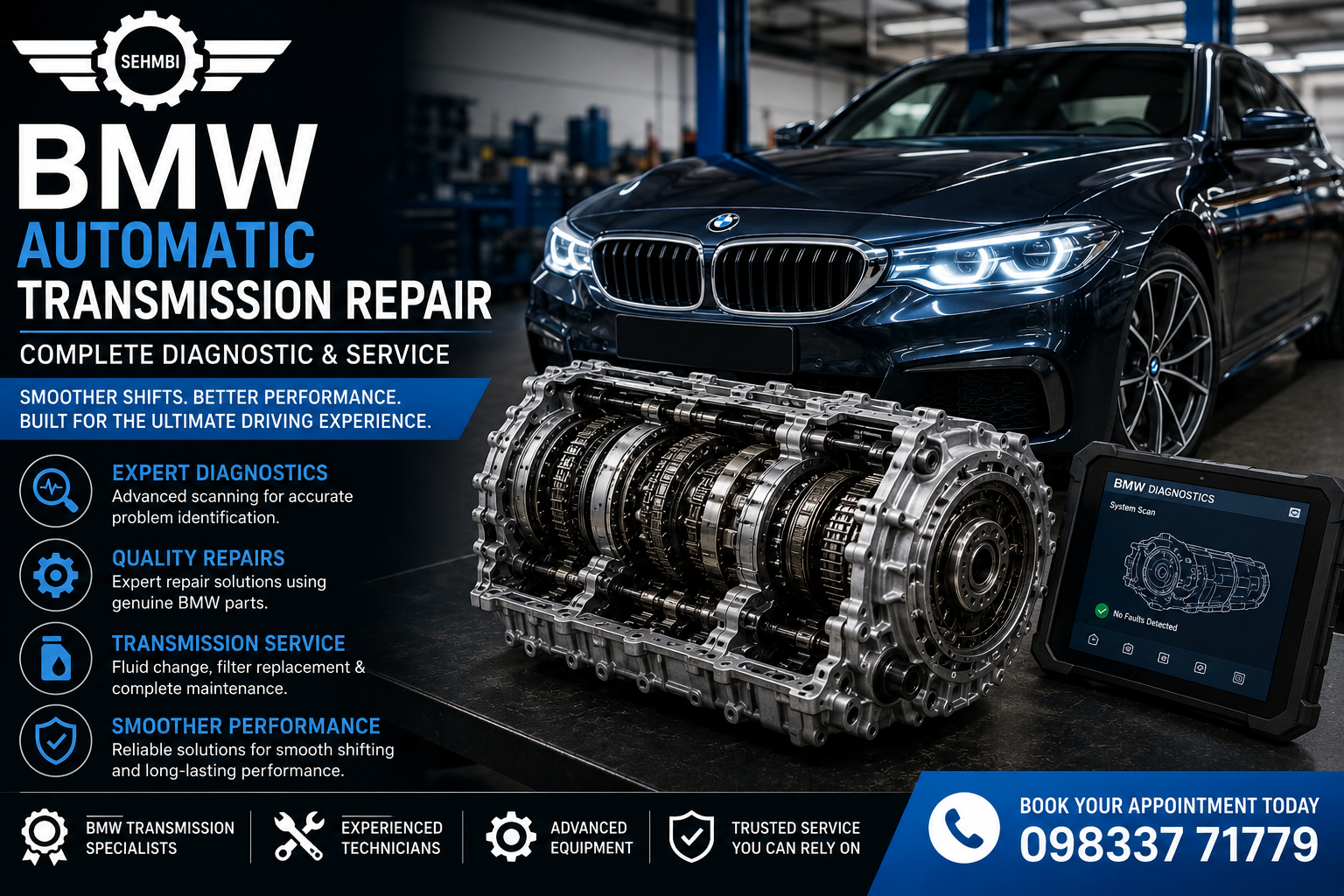
BMW vehicles are known for delivering luxury, precision engineering, and exceptional driving performance. One of the most important systems responsible for this smooth driving experience is the automatic transmission. However, like any advanced automotive system, BMW transmissions require regular servicing and expert diagnostics to maintain optimal performance.
Many BMW owners experience shifting issues, gearbox warning lights, or delayed acceleration without realizing these may be early signs of transmission failure. Understanding BMW automatic transmission repair and recognizing warning symptoms early can help prevent expensive repairs and long-term damage.
In this complete guide, we’ll cover common BMW automatic gearbox problems, diagnostic procedures, maintenance tips, and professional repair solutions to help keep your BMW running smoothly.
Understanding BMW Automatic Transmission Systems
BMW uses advanced automatic transmission technologies designed for smooth gear transitions, fuel efficiency, and sporty driving dynamics.
Modern BMW vehicles commonly use:
- ZF automatic transmissions
- Dual-clutch systems (DCT)
- Steptronic transmissions
- Electronic transmission control systems
These transmissions combine mechanical components, hydraulic systems, sensors, and electronic modules to deliver precise shifting performance.
Because of this complexity, professional BMW transmission repair service is essential when problems appear.
Why BMW Transmission Maintenance Is Important
Routine servicing plays a major role in extending transmission life and improving driving performance.
Regular BMW automatic transmission service helps:
- Improve gear shifting smoothness
- Reduce internal wear
- Prevent overheating
- Increase fuel efficiency
- Avoid major gearbox failures
Ignoring maintenance often leads to severe BMW automatic gearbox problems that may require costly repairs or complete transmission replacement.
Common BMW Automatic Gearbox Problems
BMW transmissions are highly advanced, but they can develop issues over time due to wear, overheating, or poor maintenance.
1. Rough or Delayed Gear Shifting
One of the most common BMW transmission shifting problems is rough or delayed shifting.
Symptoms:
- Jerking during acceleration
- Delay when shifting from park to drive
- Hard downshifts
Causes:
- Low transmission fluid
- Faulty solenoids
- Worn clutch components
- Valve body issues
Solution:
Professional diagnostics and transmission fluid servicing can often resolve these problems.
2. Gear Slipping
Gear slipping occurs when the transmission unexpectedly changes gears or struggles to stay in gear.
Signs:
- RPM increases without acceleration
- Power loss while driving
- Delayed response
Possible Causes:
- Internal gearbox wear
- Low hydraulic pressure
- Worn clutch packs
Professional BMW gearbox repair may involve clutch replacement or valve body repair.
3. Transmission Fluid Leaks
Transmission fluid is essential for lubrication and cooling. Leaks can quickly damage internal transmission components.
Warning Signs:
- Red or dark fluid beneath the vehicle
- Burning smell
- Overheating gearbox
Common Causes:
- Worn seals or gaskets
- Cracked transmission pan
- Loose fittings
Routine BMW transmission fluid change helps prevent severe damage.
4. Transmission Warning Lights
Modern BMW vehicles use electronic control systems to monitor gearbox performance.
If warning lights appear on the dashboard, it may indicate:
- Sensor failures
- Hydraulic pressure issues
- Overheating
- Mechatronic problems
Ignoring warning lights can lead to expensive transmission repairs.
5. Transmission Overheating
Overheating is a serious issue that affects gearbox reliability and performance.
Causes:
- Old transmission fluid
- Heavy traffic driving
- Cooling system failure
Symptoms:
- Burning smell
- Reduced performance
- Limp mode activation
Professional BMW transmission diagnostics can identify overheating causes before major damage occurs.
BMW Transmission Diagnostics Process
Modern BMW transmissions rely heavily on electronic systems and software controls.
Professional BMW transmission diagnostic service usually includes:
- Transmission fault code scanning
- Hydraulic pressure testing
- Sensor inspection
- Mechatronic system analysis
- Software calibration checks
Advanced diagnostics help technicians identify the exact cause of gearbox issues quickly and accurately.
BMW Transmission Fluid Change
Transmission fluid is one of the most important elements of gearbox performance.
Why Fluid Service Matters
Transmission fluid:
- Lubricates internal components
- Reduces friction
- Controls hydraulic pressure
- Prevents overheating
Over time, fluid becomes contaminated and loses effectiveness.
Recommended Service Interval
Most experts recommend BMW transmission fluid change every:
Driving conditions and traffic may require earlier servicing.
Benefits of Fluid Replacement
- Smoother shifting
- Better transmission cooling
- Reduced internal wear
- Longer gearbox lifespan
Ignoring fluid maintenance increases the risk of gearbox failure.
BMW Gearbox Specialist vs General Mechanic
BMW transmission systems are highly sophisticated and require specialized repair expertise.
A professional BMW gearbox specialist has:
- Advanced BMW diagnostic equipment
- Experience with ZF and DCT systems
- Access to genuine transmission parts
- Expertise in software programming and calibration
Choosing experienced specialists ensures accurate repair and long-term reliability.
BMW Automatic Transmission Repair Solutions
Depending on the issue, transmission repairs may include:
1. Valve Body Repair
The valve body controls hydraulic fluid flow inside the transmission.
Symptoms of Failure:
- Rough shifting
- Delayed gear engagement
- Gear slipping
Repairing the valve body can restore smooth transmission operation.
2. Solenoid Replacement
Faulty solenoids affect pressure control and gear shifting.
Common Symptoms:
- Transmission warning lights
- Incorrect shifting patterns
Replacing damaged solenoids improves transmission performance.
3. Clutch and Gear Component Repair
Worn clutch packs and internal gear damage can lead to slipping or power loss.
Professional BMW automatic transmission repair may involve rebuilding internal gearbox components.
4. Software Updates and Calibration
Modern BMW transmissions rely heavily on software controls.
Software updates can:
- Improve shifting quality
- Correct electronic faults
- Enhance fuel efficiency
How to Prevent BMW Transmission Problems
Preventive maintenance is the best way to avoid expensive repairs.
Important Maintenance Tips
Replace Transmission Fluid on Time
Clean fluid improves lubrication and cooling.
Avoid Aggressive Driving
Smooth driving reduces gearbox wear.
Address Warning Lights Immediately
Ignoring early symptoms increases repair costs.
Schedule Regular Diagnostics
Routine inspections help detect issues early.
Visit Experienced BMW Specialists
Professional servicing ensures proper diagnostics and repair quality.
When Should You Visit a BMW Transmission Specialist?
You should consult a professional if you notice:
- Rough shifting
- Delayed acceleration
- Gear slipping
- Burning smell
- Fluid leaks
- Transmission warning lights
A trusted automatic transmission repair center can diagnose the issue accurately and prevent complete gearbox failure.
Conclusion
BMW transmissions are engineered for exceptional driving performance, but they require regular maintenance and expert care to operate efficiently.
Understanding common BMW automatic gearbox problems, recognizing early warning signs, and following a proper maintenance schedule can help avoid expensive breakdowns.
Whether your vehicle needs fluid replacement, gearbox diagnostics, valve body repair, or complete BMW automatic transmission repair, professional servicing is essential for long-term reliability and smooth driving performance.
Routine maintenance and early diagnosis are the best ways to extend transmission life and keep your BMW performing at its best.
FAQs – BMW Automatic Transmission Repair
1. What are common BMW automatic gearbox problems?
Common issues include rough shifting, gear slipping, transmission overheating, warning lights, and delayed gear engagement.
2. How often should BMW transmission fluid be changed?
BMW transmission fluid is generally recommended to be replaced every 40,000–60,000 km depending on driving conditions.
3. Why is my BMW transmission shifting hard?
Hard shifting may occur due to low fluid levels, faulty solenoids, valve body issues, or internal gearbox wear.
4. Can BMW automatic transmissions be repaired?
Yes, many BMW transmission issues can be repaired if diagnosed early by experienced transmission specialists.
5. What causes BMW transmission overheating?
Old transmission fluid, cooling system failure, heavy traffic driving, and internal wear are common causes of overheating.
6. Why is professional BMW transmission diagnostics important?
Advanced diagnostics help identify transmission faults accurately and prevent unnecessary repairs or gearbox replacement.