If you own a Hyundai vehicle, you may have encountered or heard about Hyundai automatic transmission problems. These issues can range from minor performance glitches to severe mechanical failures that require expensive repairs. Understanding the causes and potential solutions can help you address problems early and avoid costly breakdowns.
What Are Hyundai Automatic Transmission Problems?
Hyundai transmission issues have been reported by numerous vehicle owners over the past decade. The automatic transmission is a critical component that transfers engine power to the wheels, allowing smooth gear shifts. When problems develop, you’ll experience symptoms such as delayed shifting, jerking, grinding noises, or in severe cases, complete transmission failure.
Many Hyundai owners have filed complaints about automatic transmission problems affecting various models, including the Elantra, Santa Fe, Accent, and Tucson. These issues have even led to recalls from the manufacturer, affecting thousands of vehicles worldwide.
Common Causes of Hyundai Transmission Problems
1. Defective Transmission Design
One of the primary reasons for Hyundai transmission failure is the inherent design flaws in certain transmission models. Hyundai has used several transmission variants, including the 6-speed automatic and the Theta transmission, which have been prone to issues. These Hyundai gearbox problems often stem from inadequate cooling systems and poor internal component quality.
2. Transmission Fluid Issues
The transmission fluid plays a vital role in lubricating internal components and maintaining hydraulic pressure. Over time, transmission fluid can break down due to high temperatures, leading to:
- Sludge buildup
- Reduced lubrication
- Increased friction and wear
- Metal shavings in the fluid
Regular fluid checks and changes are essential to prevent causes of Hyundai transmission problems related to fluid degradation.
3. Overheating
Hyundai vehicles are sometimes susceptible to transmission overheating due to:
- Insufficient cooling capacity
- Blocked transmission cooler lines
- Prolonged towing or hauling
- Driving in stop-and-go traffic
High temperatures accelerate fluid breakdown and damage internal seals, contributing to serious Hyundai transmission repair needs.
4. Solenoid Malfunctions
Transmission solenoids control fluid flow and pressure. When these fail, they can cause:
- Harsh shifting
- Delayed gear engagement
- Check engine light activation
- Transmission slipping
5. Worn Internal Components
Extended use and high mileage can wear out clutches, bands, and gears inside the transmission. This results in slipping gears, poor acceleration, and potential transmission breakdown.
Symptoms of Transmission Problems in Hyundai Vehicles
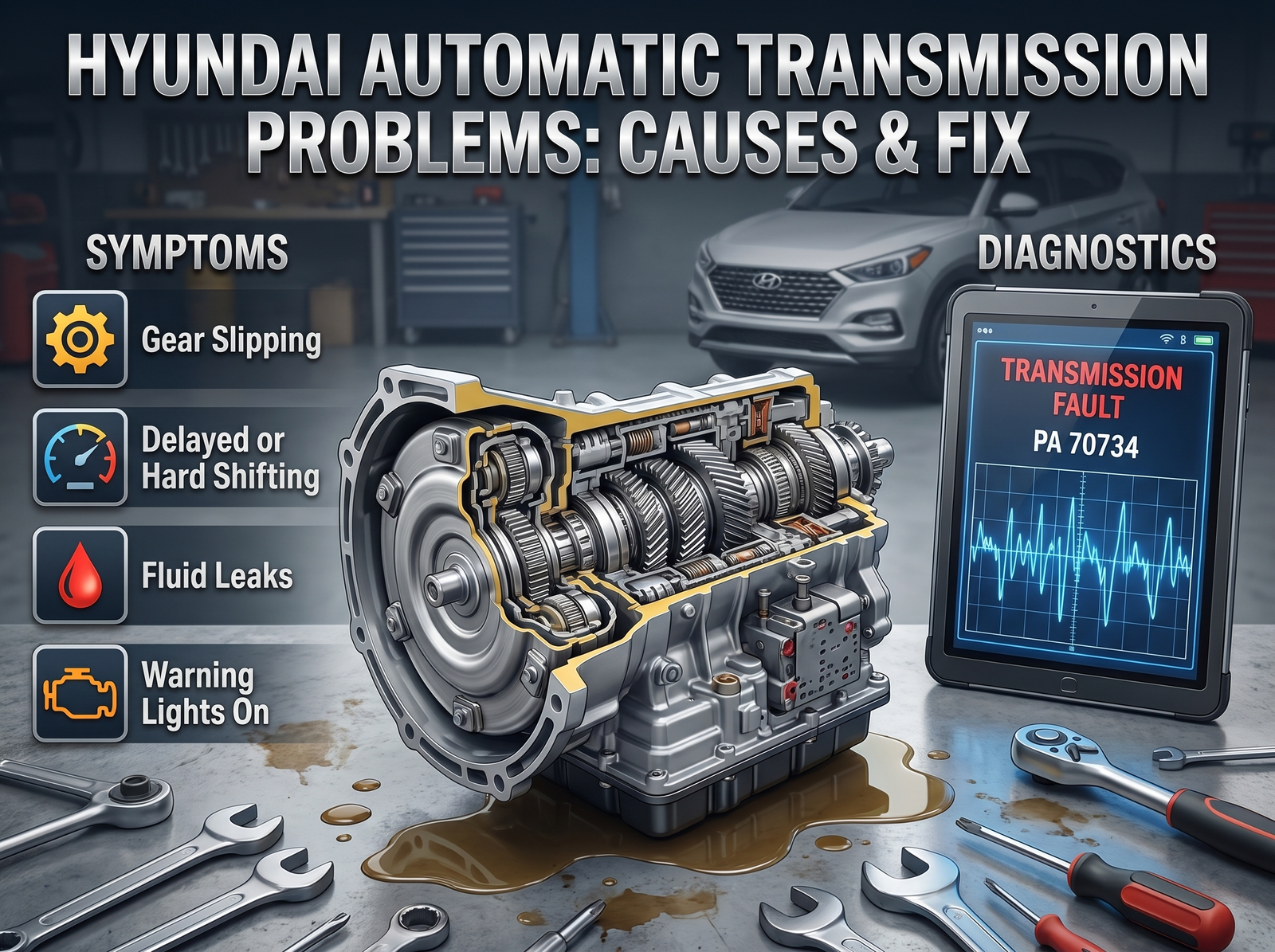
Identifying early warning signs can save you from complete transmission failure. Watch for these indicators:
- Transmission warning light on your dashboard
- Hyundai transmission shuddering during acceleration or gear changes
- Delayed response when shifting from Park to Drive
- Hyundai transmission grinding noise or unusual sounds
- Burning smell from the transmission
- Fluid leaks beneath your vehicle
- Poor fuel economy
- Slipping gears or loss of power
If you experience any of these symptoms, have your transmission inspected immediately.
How to Fix Hyundai Transmission Problems
Option 1: Fluid and Filter Change
For minor issues caused by degraded fluid, a complete transmission fluid and filter replacement might resolve the problem. This is often the most affordable solution and should be done regularly as preventative maintenance.
Option 2: Transmission Flush
A transmission flush removes all old fluid and deposits from the system before refilling with fresh fluid. This is more thorough than a simple change and can help how to fix Hyundai transmission problems in early stages.
Option 3: Solenoid Replacement
If diagnostic testing reveals solenoid failure, replacement is necessary. A faulty solenoid prevents proper fluid flow and pressure regulation.
Option 4: Transmission Repair
For moderate damage involving worn clutches, bands, or gears, localized repairs might be possible. A transmission specialist can identify specific components that need replacement without a complete overhaul.
Option 5: Transmission Replacement
When damage is extensive or the transmission has failed completely, replacement becomes necessary. Some owners opt for used transmissions, while others choose remanufactured units or new OEM parts.
Hyundai Transmission Diagnosis
Before pursuing repairs, a proper diagnosis is essential. Modern vehicles have onboard diagnostic systems that can identify transmission faults through error codes. A qualified mechanic will:
- Connect a diagnostic scanner to your vehicle
- Read trouble codes related to transmission function
- Perform a test drive to assess symptoms
- Inspect transmission fluid condition and level
- Check for leaks or external damage
Preventing Future Transmission Issues
1. Regular Maintenance
Follow your Hyundai’s maintenance schedule religiously. Regular fluid checks and changes are the best preventative measure.
2. Transmission Fluid Selection
Use only the best transmission fluid for Hyundai as specified in your owner’s manual. Using incorrect fluid can cause serious damage.
3. Avoid Aggressive Driving
Harsh acceleration, sudden braking, and towing beyond your vehicle’s capacity stress the transmission unnecessarily.
4. Monitor Transmission Temperature
Install a transmission temperature gauge if you frequently tow or drive in hot climates. Keep temperatures below the recommended threshold.
5. Address Warning Signs Immediately
Don’t ignore the Hyundai transmission warning light or unusual symptoms. Early intervention can prevent catastrophic failure.
Hyundai Transmission Recalls
Hyundai has issued several recalls addressing transmission defects. Notable recalls include:
- 2011-2019 Elantra models with 6-speed automatic transmissions
- 2010-2015 Santa Fe models
- 2012-2016 Accent and Veloster models
Check your vehicle identification number (VIN) on the NHTSA website or Hyundai’s official site to see if your vehicle is affected by any Hyundai transmission recalls.
When to Seek Professional Help
Visit a qualified transmission specialist if you notice:
- Persistent Hyundai transmission issues despite maintenance
- Multiple warning lights on your dashboard
- Severe shuddering or jerking
- Transmission fluid leaks
- Loss of power or inability to shift gears
Conclusion
Hyundai automatic transmission problems are a legitimate concern for many vehicle owners, but understanding the causes and available solutions empowers you to make informed decisions. Whether you’re experiencing automatic transmission problems or want to prevent them, prioritize regular maintenance and address warning signs promptly.
By staying proactive about transmission health through fluid changes, using the correct transmission fluid, and seeking professional diagnostics when needed, you can extend your transmission’s lifespan and avoid costly repairs. If you’re currently dealing with Hyundai transmission repair needs, consult a certified mechanic to determine the best course of action for your specific situation.
Remember, early detection and intervention are your best defenses against serious transmission failure. Don’t wait—address Hyundai gearbox problems as soon as they appear.