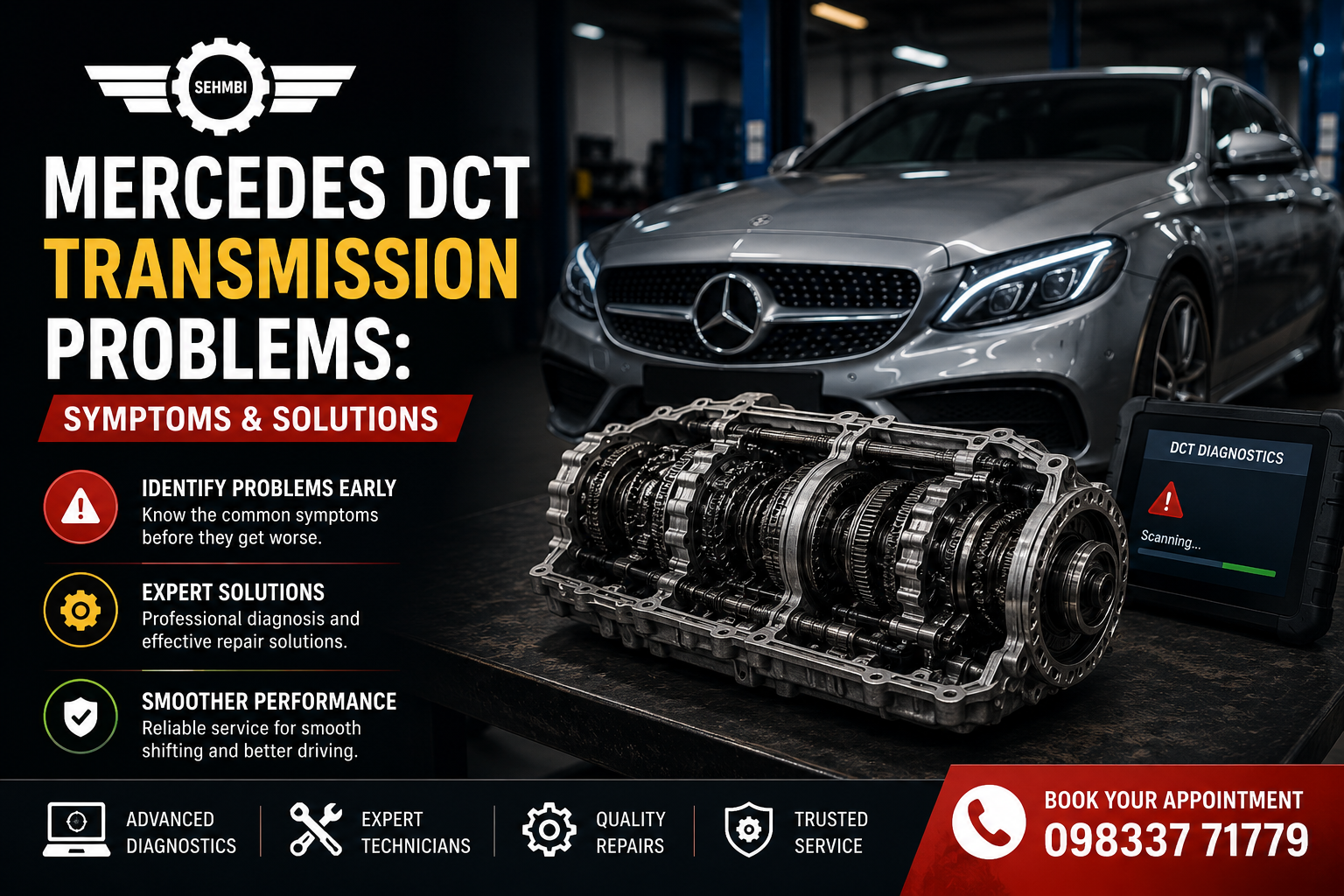
Mercedes-Benz vehicles are known for luxury, innovation, and advanced driving technology. One of the most advanced systems used in modern Mercedes vehicles is the DCT (Dual Clutch Transmission). This transmission is designed to provide faster gear changes, smoother acceleration, and improved fuel efficiency. However, like any complex automotive system, it can develop issues over time.
Many drivers experience Mercedes DCT transmission problems without understanding the warning signs or causes behind them. Ignoring these issues can eventually lead to expensive gearbox repairs and reduced vehicle performance.
In this guide, we will explain common Mercedes dual clutch transmission issues, symptoms, causes, repair solutions, and maintenance tips to help keep your transmission running smoothly.
What Is a Mercedes DCT Transmission?
A DCT (Dual Clutch Transmission) is an advanced automatic gearbox that uses two separate clutches to control odd and even gears independently. This allows faster and smoother gear changes compared to traditional automatic transmissions.
Mercedes uses DCT systems in several performance and compact luxury models because they offer:
- Quick gear shifts
- Better fuel efficiency
- Improved acceleration
- Enhanced driving comfort
However, because these systems combine mechanical, hydraulic, and electronic components, they require specialized maintenance and repair.
Common Mercedes DCT Transmission Problems
Over time, several Mercedes DCT gearbox problems may appear, especially in vehicles with high mileage or poor maintenance history.
1. Rough or Jerky Gear Shifting
One of the most common Mercedes DCT transmission symptoms is rough shifting between gears.
Symptoms:
- Jerking during acceleration
- Sudden gear engagement
- Hard downshifting
Possible Causes:
- Worn clutch components
- Low transmission fluid
- Faulty mechatronic unit
- Software calibration issues
Solution:
Professional Mercedes DCT transmission repair often includes clutch inspection, fluid replacement, or transmission software updates.
2. Delayed Gear Engagement
Delayed shifting is another major issue in DCT systems.
Signs:
- Delay when shifting from park to drive
- Slow response during acceleration
- Hesitation while changing gears
Causes:
- Transmission fluid contamination
- Hydraulic pressure problems
- Faulty transmission sensors
Fix:
A transmission diagnostic scan can identify electronic or hydraulic issues quickly.
3. Transmission Overheating
Overheating is a serious issue that can damage internal gearbox components.
Common Symptoms:
- Burning smell
- Dashboard warning light
- Reduced transmission performance
Main Causes:
- Low or dirty transmission fluid
- Heavy traffic driving conditions
- Internal clutch wear
Solution:
Routine Mercedes DCT transmission service and cooling system inspection can prevent overheating.
4. Gear Slipping Problems
Gear slipping occurs when the transmission unexpectedly changes gears or fails to stay in the selected gear.
Warning Signs:
- RPM increases without acceleration
- Vehicle loses power
- Sudden gear changes
Causes:
- Worn dual-clutch assembly
- Mechatronic failure
- Hydraulic pressure loss
Repair:
Professional gearbox diagnostics are essential to prevent further internal damage.
5. Transmission Warning Light
Modern Mercedes vehicles use sensors and control modules to monitor transmission performance.
If the transmission warning light appears, it may indicate:
- Electronic faults
- Sensor failures
- Gearbox overheating
- Mechatronic unit problems
Ignoring the warning light can lead to severe transmission failure.
Causes of Mercedes Dual Clutch Transmission Issues
Understanding the root causes helps prevent expensive repairs.
Common Causes Include:
1. Poor Maintenance
Delayed servicing increases wear on clutch components and transmission fluid.
2. Low Transmission Fluid
Insufficient fluid reduces lubrication and cooling.
3. Aggressive Driving
Frequent sudden acceleration increases clutch wear.
4. Software Malfunctions
Electronic transmission systems sometimes require recalibration or updates.
5. Mechatronic Unit Failure
The mechatronic system controls gear shifting electronically and hydraulically. Failure can affect overall gearbox performance.
Mercedes DCT Transmission Repair Solutions
Professional diagnosis is extremely important when dealing with Mercedes DCT transmission solutions.
Depending on the issue, repairs may include:
Transmission Fluid Replacement
Old fluid loses lubrication properties and causes overheating.
Benefits:
- Smoother shifting
- Reduced wear
- Better cooling performance
Mercedes experts generally recommend transmission fluid replacement every 40,000–60,000 km.
Clutch Replacement
The dual-clutch assembly wears over time, especially in heavy traffic conditions.
Signs You Need Clutch Repair:
- Gear slipping
- Jerky acceleration
- Delayed shifting
Replacing worn clutch components restores smooth performance.
Mechatronic Unit Repair
The mechatronic system controls hydraulic pressure and gear selection.
Symptoms of Failure:
- Transmission warning lights
- Incorrect shifting
- Limp mode activation
Repairing or replacing the mechatronic unit often resolves shifting issues.
Software Updates & Calibration
Modern Mercedes DCT systems rely heavily on software programming.
Transmission software updates can:
- Improve shifting smoothness
- Correct electronic glitches
- Enhance fuel efficiency
Mercedes DCT Transmission Maintenance Tips
Preventive maintenance is the best way to avoid costly gearbox repairs.
Important Maintenance Tips:
Check Transmission Fluid Regularly
Low fluid levels can damage internal components.
Avoid Aggressive Driving
Smooth driving reduces clutch wear.
Service the Gearbox on Time
Routine inspections detect issues early.
Address Warning Signs Immediately
Ignoring symptoms increases repair costs.
Visit Experienced Transmission Specialists
Mercedes DCT systems require advanced diagnostic tools and expertise.
Why Professional Diagnostics Matter
Mercedes DCT gearboxes are highly sophisticated systems. General mechanics may not have the specialized tools needed for accurate diagnosis.
A professional automatic transmission repair center can:
- Scan fault codes
- Check hydraulic pressure
- Test electronic systems
- Diagnose clutch and mechatronic issues accurately
This ensures proper repair and long-term reliability.
When Should You Visit a Transmission Specialist?
You should seek professional help if you notice:
- Rough shifting
- Delayed gear engagement
- Burning smell
- Gear slipping
- Warning lights
- Unusual noises from gearbox
Early repairs can prevent complete transmission failure.
Conclusion
Mercedes DCT systems offer exceptional performance, smooth acceleration, and advanced driving comfort. However, like any sophisticated transmission system, they require regular maintenance and expert care.
Understanding common Mercedes DCT transmission problems, recognizing warning signs early, and following proper maintenance practices can help extend gearbox life and reduce repair costs.
Whether your vehicle needs fluid replacement, clutch repair, or mechatronic diagnostics, professional Mercedes DCT transmission repair ensures reliable performance and smoother driving for years to come.
FAQs – Mercedes DCT Transmission Problems
1. What are common Mercedes DCT transmission problems?
Common issues include rough shifting, delayed gear engagement, overheating, gear slipping, and transmission warning lights.
2. How often should Mercedes DCT transmission fluid be changed?
Most experts recommend replacing transmission fluid every 40,000–60,000 km depending on driving conditions.
3. What causes Mercedes DCT gearbox problems?
Common causes include poor maintenance, low transmission fluid, clutch wear, software issues, and mechatronic failure.
4. Can Mercedes DCT transmissions be repaired?
Yes, many DCT transmission issues can be repaired if diagnosed early by a qualified transmission specialist.
5. Why does my Mercedes DCT transmission jerk while shifting?
Jerking may occur due to worn clutch components, low fluid, software calibration issues, or hydraulic pressure problems.
6. Is Mercedes DCT transmission repair expensive?
Repair costs vary depending on the issue. Minor repairs are affordable, while clutch or mechatronic replacement may cost more.