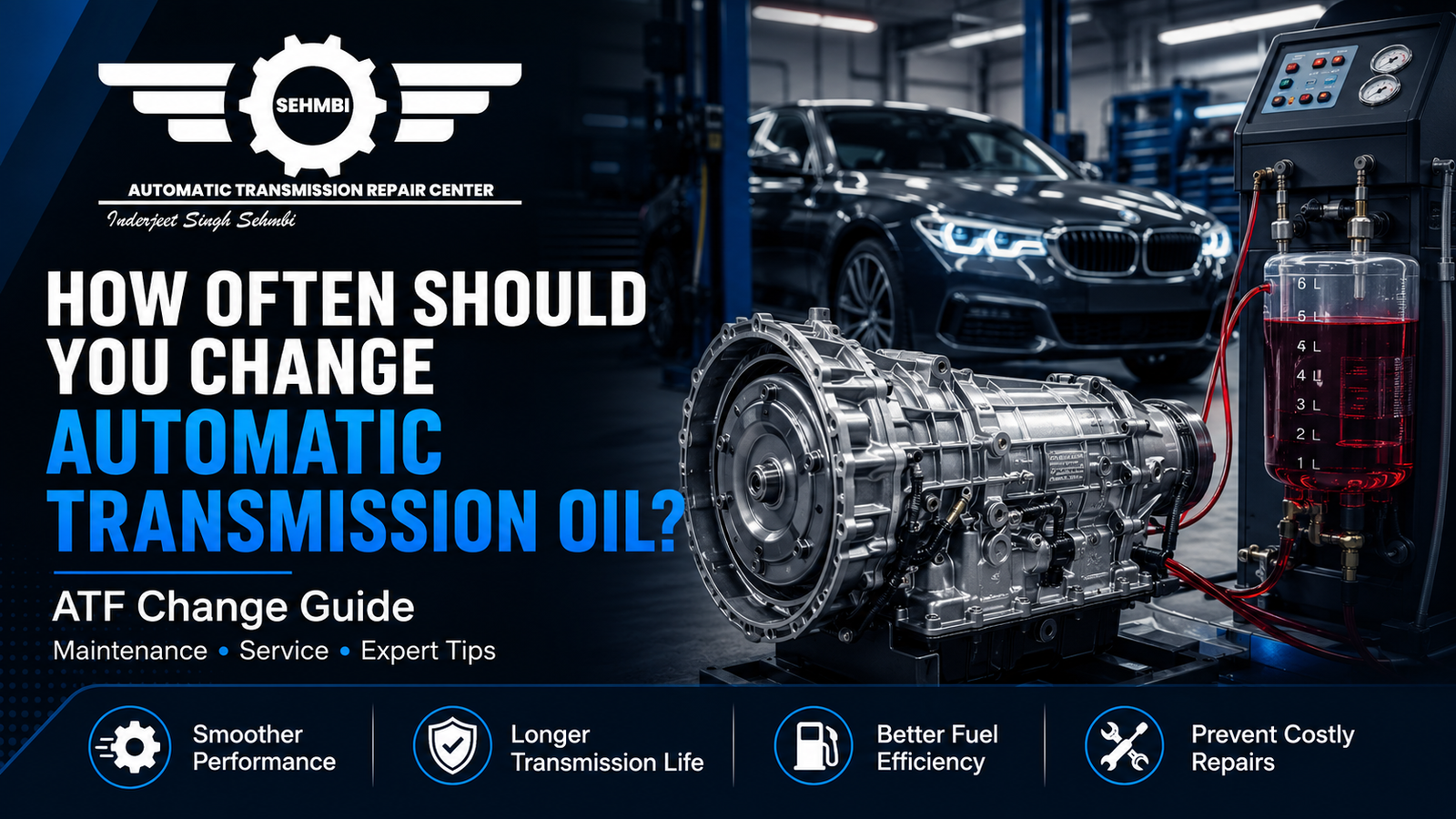
Most automatic transmission fluids should be inspected every 30,000–40,000 km and may require replacement between 40,000 and 60,000 km. However, the correct interval depends on your car model, transmission type, fluid specification and driving conditions.
There is no universal automatic transmission oil change interval for every vehicle. Some manufacturers specify fluid replacement at a fixed mileage, while others recommend inspection or replacement only under severe operating conditions. Nissan maintenance schedules, for example, vary by model and may require CVT-fluid inspection or replacement at defined intervals, while Toyota also advises shorter intervals under demanding conditions such as towing and stop-and-go driving.
Quick answer: Check your owner’s manual first. For cars regularly driven in Mumbai traffic, an automatic transmission-fluid inspection around 30,000–40,000 km is sensible, even when the manufacturer specifies a longer replacement interval.
What Is Automatic Transmission Oil?
Automatic transmission oil is commonly called automatic transmission fluid or ATF. It performs several functions inside the gearbox:
- Lubricates gears, bearings and clutch components
- Produces hydraulic pressure for gear changes
- Cools internal transmission parts
- Operates the valve body and solenoids
- Reduces friction and wear
- Transfers power through the torque converter
Automatic gearboxes do not all use the same fluid. A conventional torque-converter transmission, CVT, wet-clutch DSG and DCT may each require a different formulation.
Using the wrong fluid may cause poor shifting, overheating, vibration or internal damage. Always use the exact fluid grade approved by the vehicle manufacturer rather than choosing oil only by price or colour.
For a clearer understanding of different gearbox technologies, read our CVT vs DSG vs torque converter comparison.
Recommended Transmission-Oil Change Interval
The following ranges are general maintenance guidance, not fixed rules:
| Transmission type or usage |
General inspection or service range |
| Torque-converter automatic |
40,000–60,000 km |
| CVT transmission |
30,000–60,000 km |
| Wet-clutch DSG or DCT |
Around 60,000 km where specified |
| AMT gearbox |
Follow the vehicle-specific schedule |
| Heavy city and stop-go driving |
Inspect around 30,000–40,000 km |
| Manufacturer-labelled lifetime fluid |
Inspect for leaks and fluid condition |
Nissan’s official maintenance information demonstrates why vehicle-specific guidance matters: some CVT models list replacement at 30,000 miles, while other schedules use different intervals or fluid-condition inspection.
Therefore, when asking how many kilometres to change transmission oil, the safest answer is:
Follow the owner’s manual, use the correct fluid specification and inspect the transmission earlier when the car operates in heavy traffic, high heat, towing conditions or frequent short trips.
Oil Change Interval by Gearbox Type
Torque-converter automatic transmission
A torque-converter gearbox uses fluid for hydraulic control, cooling and power transfer. The general torque converter transmission oil change interval is often between 40,000 and 60,000 km, depending on manufacturer instructions.
Earlier inspection may be needed when the vehicle experiences:
- Daily bumper-to-bumper traffic
- Frequent hill driving
- Heavy loads or towing
- Transmission overheating
- Fluid leakage
- Delayed or rough shifting
CVT transmission
A CVT uses variable pulleys with a steel belt or chain. Its fluid must provide the correct friction, pressure and cooling properties.
The CVT oil change interval commonly falls between 30,000 and 60,000 km, but it varies significantly by model. Certain Nissan schedules specify CVT-fluid replacement every 30,000 miles, illustrating that the manufacturer’s schedule must take priority over generic advice. Never substitute conventional ATF for CVT fluid unless the manufacturer specifically approves it.
DSG and DCT transmissions
A DSG or DCT uses two clutches and electronically controlled gear selection. Wet-clutch gearboxes may require periodic fluid and filter replacement, often near 60,000 km where specified. Dry-clutch units may follow a different maintenance plan.
The correct DSG oil change interval depends on the transmission code, clutch design and vehicle model. For DSG servicing and repair information, visit our Volkswagen automatic transmission repair service page or read the Volkswagen DSG transmission repair guide.
AMT transmission
An AMT combines a manual-style gearbox with electronic clutch and gear actuators. Its gearbox oil may follow a different replacement schedule from conventional ATF.
The clutch actuator, gear actuator, wiring and calibration may require separate checks. Follow the exact automatic transmission maintenance schedule listed for your vehicle.
Signs Your Transmission Fluid Needs Changing
Mileage is not the only deciding factor. Arrange an inspection when you notice these old transmission fluid symptoms:
- Jerking or harsh shifting
- Delayed engagement in Drive or Reverse
- Transmission slipping
- Hesitation during gear changes
- Humming or whining noises
- Transmission overheating
- Fluid leakage
- Dark, contaminated oil
- Burning smell
- Gearbox warning light
A dark colour alone does not always mean the fluid has failed because different transmission oils have different normal appearances. However, visible contamination, metal particles or a burnt transmission fluid smell require immediate attention.
Low or contaminated fluid may affect hydraulic pressure, solenoid operation and clutch engagement. Review the signs your automatic gearbox needs immediate repair if the car is slipping, jerking or responding slowly.
What Happens If Transmission Oil Is Not Changed?
Transmission fluid gradually experiences heat, oxidation and contamination. As it deteriorates, it may lose its ability to cool, lubricate and maintain stable hydraulic pressure.
Failure to service degraded fluid can contribute to:
- Valve-body contamination
- Solenoid malfunction
- Clutch-pack wear
- Poor hydraulic pressure
- Gear slipping
- Delayed shifting
- Transmission overheating
- Bearing damage
- Complete gearbox failure
So, can old transmission fluid damage the gearbox? Old fluid may contribute to accelerated wear, especially when it is low, contaminated or no longer meets the required performance specification.
Changing fluid will not repair an already damaged transmission. If the vehicle has severe slipping, metal contamination or internal noise, it should be diagnosed before any routine oil service.
Transmission Fluid Flush vs Drain and Fill
Drain and fill
A drain-and-fill removes part of the old fluid and replaces it with fresh, approved oil. Depending on the gearbox, the service may also include:
- Transmission-pan removal
- Filter replacement
- Gasket replacement
- Magnet and pan inspection
- Correct temperature-based fluid-level setting
This is often the preferred method for scheduled maintenance because the technician can inspect the removed fluid and pan.
Transmission flush
A flush replaces a larger proportion of old fluid using circulation or specialised equipment. It may be appropriate for some transmissions when specifically approved.
However, aggressive flushing may not suit every high-mileage, neglected or internally damaged gearbox. The decision between a transmission fluid flush vs drain and fill should be based on the manufacturer’s procedure, service history, diagnostic results and fluid condition.
Is Transmission Fluid Really “Lifetime”?
The term “lifetime fluid” does not necessarily mean that transmission oil remains perfect forever. It usually refers to the manufacturer’s defined service life under particular operating conditions.
Heat, heavy traffic, towing, water contamination, leaks and internal wear can still affect the fluid. Toyota notes that shorter transmission-fluid intervals may be appropriate for stop-and-go traffic, towing and severe operating conditions.
Even when replacement is not listed as routine maintenance, fluid leaks, warning signs and shifting quality should still be inspected.
Automatic Transmission Oil Change Cost in Mumbai
The automatic transmission oil change cost in Mumbai depends on:
- Car make and model
- Gearbox type
- Required fluid quantity
- ATF, CVT or DSG fluid specification
- Filter and gasket requirements
- Labour and diagnostic checks
- Drain-and-fill or approved flush procedure
Premium and imported vehicles generally require specialised oils and larger fluid quantities.
For related servicing, diagnosis and repair estimates, read our automatic transmission repair cost in Mumbai guide.
Automatic Transmission Oil Change in Mumbai
Mumbai’s traffic involves frequent idling, low-speed crawling and repeated gear engagement. These conditions can increase gearbox temperature and place additional stress on the fluid.
SEHMBI Automatic Transmission Repair Center provides fluid inspection, computerized diagnostics, servicing, repairs, rebuilding and overhaul support for conventional automatic, CVT, DSG, DCT, AMT and ZF gearboxes. The company states that it has specialised in automatic transmission work since 1980 and offers repair support across multiple Mumbai locations.
Not Sure When Your Transmission Oil Was Last Changed?
Book an ATF condition check before approving a flush or fluid replacement. The inspection can evaluate fluid level, smell, contamination, leakage, fault codes and shifting performance.
For professional support, visit the best automatic transmission repair centre in Mumbai or call SEHMBI at +91 98337 71779.
Frequently Asked Questions
At what mileage should transmission fluid be changed?
Many automatic transmissions need inspection or servicing between 30,000 and 60,000 km. The exact interval must come from the vehicle’s owner’s manual.
Should transmission fluid be changed every 40,000 km?
It may be suitable for some vehicles operating in severe traffic, but it is not a universal rule. Confirm the gearbox type and manufacturer schedule.
Can I change transmission oil after 100,000 km?
Yes, but a high-mileage transmission should be inspected first. Fluid condition, shifting quality, fault codes and maintenance history should determine the procedure.
How do I know when transmission fluid needs changing?
Jerking, slipping, delayed engagement, overheating, leakage, visible contamination and a burning smell are common warning signs.
Is a transmission flush better than a drain and fill?
Not always. A drain-and-fill is often more suitable for routine maintenance. A flush should be performed only when approved for that gearbox and appropriate for its condition.
Can dirty ATF cause jerking or slipping?
Yes. Low or contaminated fluid may affect hydraulic pressure, lubrication, clutch engagement and solenoid operation.
How often should an automatic transmission be serviced?
Follow the manufacturer’s schedule, but consider an earlier inspection if the car is regularly driven in Mumbai traffic, high temperatures or other severe conditions.