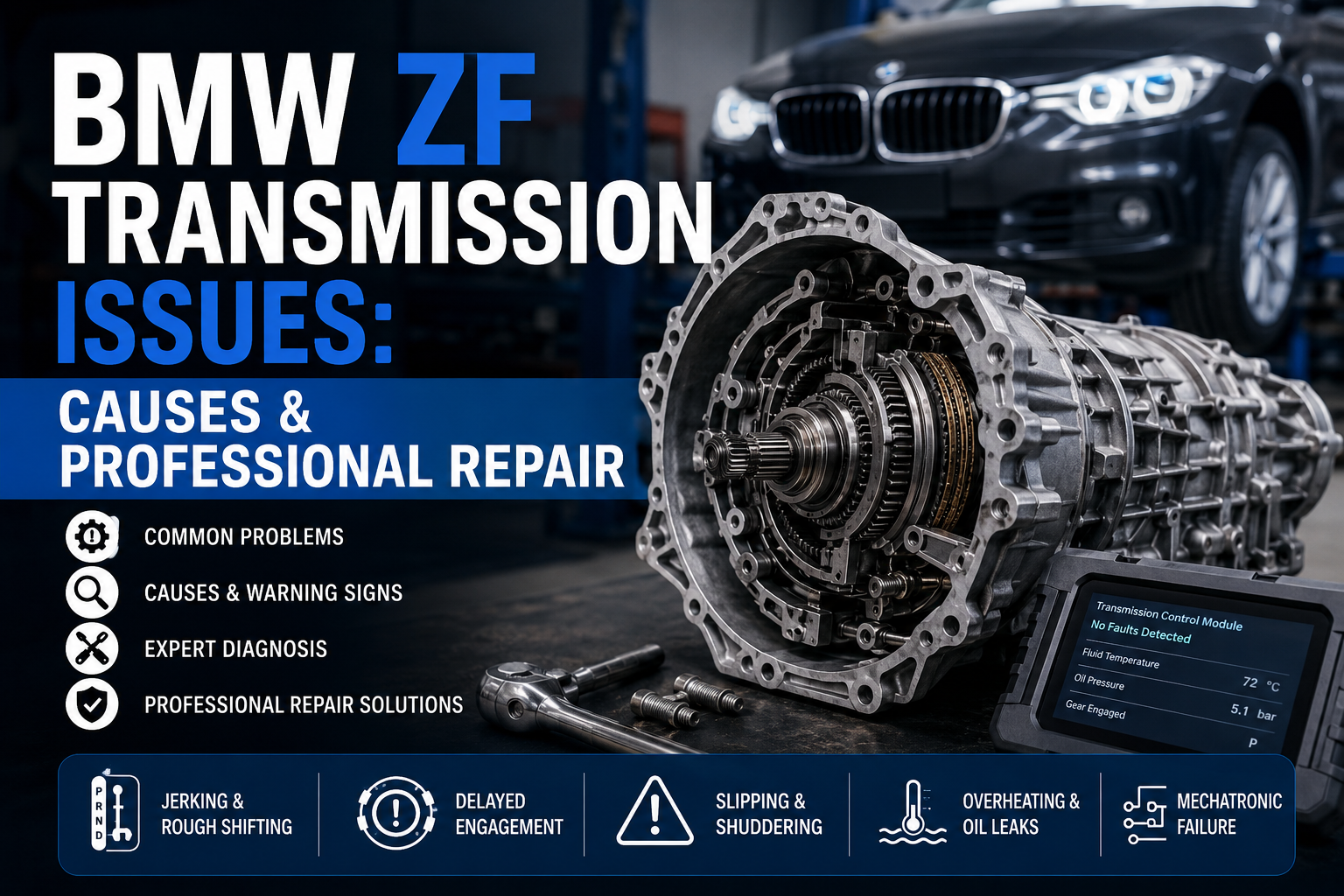
Modern BMW vehicles are known for their refined performance, and a major reason for their smooth driving experience is the advanced automatic transmission technology supplied by ZF Friedrichshafen AG. Many popular BMW models use the highly regarded ZF 6HP and ZF 8HP gearboxes, but like any sophisticated mechanical system, they can develop problems over time.
If you are experiencing BMW ZF transmission issues such as rough shifting, transmission hesitation, slipping gears, or warning messages on the dashboard, early diagnosis can prevent major damage and significantly reduce repair costs. In this guide, we explain the most common BMW ZF transmission problems, their causes, warning signs, and the best professional repair solutions.
What Are BMW ZF Transmission Issues?
BMW ZF transmission issues refer to faults that occur in the automatic gearboxes installed in many BMW vehicles. These transmissions are engineered for precision, but wear, contaminated transmission fluid, electronic faults, and overheating can lead to performance problems.
Common symptoms include:
- Delayed gear engagement
- Hard or jerky shifting
- Transmission slipping issues
- Torque converter shudder
- Gearbox malfunction warning
- Unusual noises
- Reduced acceleration
- Limp mode activation
These symptoms may appear gradually or suddenly, depending on the underlying cause.
Common BMW ZF Transmission Problems
1. BMW Transmission Jerking Problem
One of the most frequently reported complaints is harsh or jerky gear changes, especially during low-speed driving. This often points to valve body wear, solenoid issues, or software adaptation problems.
2. BMW Transmission Slipping Issues
If engine RPM rises without corresponding acceleration, the transmission may be slipping. Worn clutch packs, low fluid pressure, or torque converter faults are common causes.
3. Delayed Gear Engagement
A delay when shifting into Drive or Reverse can indicate internal pressure loss, leaking seals, or fluid degradation.
4. Torque Converter Problems
BMW torque converter problems often cause shuddering or vibration during acceleration. Over time, internal lock-up clutch wear can affect overall gearbox performance.
5. Mechatronic Unit Failure
The mechatronic system combines electronics and hydraulics to control shifting. BMW mechatronic repair is frequently required when sensors, solenoids, or control modules fail.
6. Transmission Oil Leak
A transmission oil leak can reduce hydraulic pressure and lead to overheating and clutch damage if not repaired quickly.
BMW ZF 6HP Transmission Problems
The ZF 6HP series is used in many earlier BMW models and is known for durability, but common BMW ZF 6HP transmission problems include:
- Hard 2–3 gear shifts
- Torque converter lock-up shudder
- Valve body wear
- Solenoid malfunction
- Fluid pan gasket leaks
These issues are usually repairable when detected early.
BMW ZF 8HP Transmission Issues
The ZF 8HP is one of the most advanced automatic transmissions in the industry, offering excellent fuel efficiency and smooth performance. However, BMW ZF 8HP transmission issues can still occur, such as:
- Rough shifting after high mileage
- Adaptation faults
- Mechatronic module problems
- Oil contamination
- Software calibration errors
Routine maintenance significantly improves long-term reliability.
Main Causes of BMW ZF Gearbox Issues
Several factors contribute to BMW ZF gearbox issues:
Worn Transmission Fluid
Old fluid loses its lubricating and cooling properties, causing increased friction and poor shift quality.
Overheating
Excess heat accelerates wear of seals, clutch packs, and electronic components.
Lack of Maintenance
Skipping fluid and filter changes can lead to contamination and internal damage.
Aggressive Driving
Frequent hard acceleration increases stress on clutch packs and the torque converter.
Electronic Faults
Sensors, wiring, and control modules may trigger transmission fault diagnosis codes and limp mode.
BMW Transmission Warning Signs You Should Not Ignore
Recognizing BMW transmission warning signs early can help avoid a complete transmission overhaul.
Watch for:
- Dashboard transmission warnings
- Sudden jerks while shifting
- Delayed response
- Burning smell
- Fluid leaks under the vehicle
- Whining or grinding noises
- Reduced fuel efficiency
Professional BMW Transmission Repair Process
At a specialized BMW automatic gearbox repair center, technicians use advanced tools and manufacturer-level diagnostics to identify the exact issue.
Typical repair steps include:
- Computerized transmission fault diagnosis
- Road testing
- Fluid inspection
- Fault code analysis
- Mechatronic testing
- Valve body repair or replacement
- Torque converter inspection
- Adaptation reset and software programming
Choosing BMW gearbox repair specialists ensures that your transmission receives accurate repairs rather than temporary fixes.
BMW Gearbox Repair Cost
BMW gearbox repair cost depends on the severity of the fault and the components involved.
Typical repair categories include:
- Fluid and filter service
- Solenoid replacement
- Valve body repair
- BMW mechatronic repair
- Torque converter rebuild
- Complete transmission overhaul
Early repairs are generally far more affordable than full replacement.
BMW Automatic Transmission Repair vs Replacement
In most cases, BMW automatic transmission repair is more cost-effective than replacement. Components such as solenoids, seals, valve bodies, and mechatronic units can often be repaired individually.
Replacement is usually recommended only when there is extensive internal damage or catastrophic failure.
How to Prevent BMW ZF Transmission Problems
To minimize future BMW ZF transmission problems:
- Service the transmission fluid at recommended intervals
- Repair leaks immediately
- Avoid overheating
- Use approved transmission fluid
- Address warning signs promptly
- Have the vehicle inspected by automatic transmission experts
Preventive maintenance extends transmission life and preserves driving performance.
Why Choose Professional BMW Transmission Repair Experts?
BMW transmissions require specialized knowledge, precision tools, and genuine components. Professional BMW transmission repair experts understand the complexities of ZF gearboxes and can accurately diagnose and repair issues ranging from minor faults to full rebuilds.
A reputable transmission repair center provides:
- Advanced diagnostics
- Genuine or OEM-quality parts
- Experienced technicians
- Warranty-backed repairs
- Long-term reliability
Frequently Asked Questions (FAQ)
1) What are the most common BMW ZF transmission issues?
The most common issues include jerking, slipping, delayed engagement, torque converter shudder, mechatronic failures, and fluid leaks.
2) How do I know if my BMW transmission needs repair?
Warning signs include rough shifting, transmission hesitation, dashboard alerts, unusual noises, and reduced performance.
3) Are BMW ZF 8HP transmissions reliable?
Yes, the ZF 8HP is highly reliable when properly maintained, but wear-related issues can develop over time.
4) What causes BMW transmission slipping issues?
Low fluid pressure, worn clutch packs, torque converter faults, and internal seal leaks are common causes.
5) Can BMW mechatronic repair solve shifting problems?
Yes, many electronic and hydraulic shifting issues are caused by mechatronic unit faults.
6) Is transmission repair better than replacement?
In most cases, targeted BMW automatic transmission repair is more affordable and effective than complete replacement.
7) How often should BMW transmission fluid be changed?
Many specialists recommend servicing the fluid and filter approximately every 60,000 to 80,000 kilometers, depending on driving conditions.
Conclusion
BMW ZF transmission issues are common in high-performance vehicles, but most problems can be resolved with timely diagnosis and expert repair. Whether you are facing BMW transmission jerking problems, slipping issues, or complex mechatronic faults, professional attention from experienced BMW gearbox repair specialists can restore smooth and reliable performance.
If your BMW shows any transmission warning signs, schedule a detailed transmission fault diagnosis with trusted automatic transmission experts and protect your investment before minor issues become major repairs.